Showing posts with label contextual. Show all posts

Thursday, 26 March 2015

Parade American/British Pop Art

Pop art is an art movement that emerged in the mid-1950s in Britain and in the late 1950s in the United States. Pop art presented a challenge to traditions of fine art by including imagery from popular culture such as advertising, news, etc. In pop art, material is sometimes visually removed from its known context, isolated, and/or combined with unrelated material. The concept of pop art refers not as much to the art itself as to the attitudes that led to it

 British Pop art

The Independent Group (IG), founded in London in 1952, is regarded as the precursor to the pop art movement. They were a gathering of young painters, sculptors, architects, writers and critics who were challenging prevailing modernist approaches to culture as well as traditional views of Fine Art. The group discussions centered on popular culture implications from such elements as mass advertising, movies, product design, comic strips, science fiction and technology. At the first Independent Group meeting in 1952, co-founding member, artist and sculptor Eduardo Paolozzi presented a lecture using a series of collages titled Bunk! that he had assembled during his time in Paris between 1947–1949. This material of "found objects" such as, advertising, comic book characters, magazine covers and various mass-produced graphics that mostly represented American popular culture. One of the images in that presentation was Paolozzi's 1947 collage, I was a Rich Man's Plaything, which includes the first use of the word "pop″, appearing in a cloud of smoke emerging from a revolver. Following Paolozzi's seminal presentation in 1952, the IG focused primarily on the imagery of American popular culture, particularly mass advertising

American Pop art

Although Pop Art began in the late 1950s, Pop Art in America was given its greatest impetus during the 1960s. The term "Pop Art" was officially introduced in December 1962; the Occasion was a "Symposium on Pop Art" organized by the Museum of Modern Art. By this time, American advertising had adopted many elements and inflections of modern art and functioned at a very sophisticated level. Consequently, American artists had to search deeper for dramatic styles that would distance art from the well-designed and clever commercial materials. As the British viewed American popular culture imagery from a somewhat removed perspective, their views were often instilled with romantic, sentimental and humorous overtones. By contrast, American artists being bombarded daily with the diversity of mass-produced imagery, produced work that was generally more bold and aggressive.

http://www.personal.psu.edu/mas53/warhol.jpg

http://upload.wikimedia.org/wikipedia/en/d/df/Roy_Lichtenstein_Drowning_Girl.jpg

http://www.metmuseum.org/toah/images/h2/h2_1972.724.3.jpg

When researching I didn't learn much, I mainly focused on the gaming side of the 1950's.
I actually learned quite a lot from looking at a video, I learned all about the history of gaming going through 1958 to 2004, I found out that the first ever real game was not 'Pong' as most people think but it was actually a game called 'Tennis for two' which was a two-dimensional, side view of a tennis court on the oscilloscope screen, which used a cathode-ray tube similar to a black and white television tube. The ball, a brightly lit, moving dot, left trails as it bounced to alternating sides of the net. Players served and volleyed using controllers with buttons and rotating dials to control the angle of an invisible tennis racquet’s swing.

Tennis for Two was first introduced on October 18, 1958, at one of the Lab’s annual visitors’ days.

Pong was one of the earliest arcade game's and was what really started of the gaming industry.

I also learned that one of the people that worked with Atari actually went onto create the American  franchise 'Chuck E Cheese'


Friday, 20 March 2015

Parade 1950 Abstract Expressionism

Abstract Expressionism is a type of art in which the artist expresses himself purely through the use of form and color. It non-representational, or non-objective, art, which means that there are no actual objects represented.
Now considered to be the first American artistic movement of international importance, the term was originally used to describe the work of Willem de Kooning, Jackson Pollock and Arshile Gorky.

The movement can be more or less divided into two groups: Action Painting, typified by artists such as Pollock, de Kooning, Franz Kline, and Philip Guston, stressed the physical action involved in painting; Color Field Painting, practiced by Mark Rothko and Kenneth Noland, among others, was primarily concerned with exploring the effects of pure color on a canvas.


Abstract expressionism is a post–World War II art movement in American painting, developed in New York in the 1940s. It was the first specifically American movement to achieve international influence and put New York City at the centre of the western art world, a role formerly filled by Paris.


Wassily Kandinsky

Russian-born painter Wassily Kandinsky is credited as a leader in avant-garde art as one of the founders of pure abstraction in painting in the early 20th century.

Born in Moscow in 1866, Wassily Kandinsky took up the study of art in earnest at age 30, moving to Munich to study drawing and painting. A trained musician, Kandinsky approached color with a musician’s sensibility. An obsession with Monet led him to explore his own creative concepts of color on canvas, which were sometimes controversial among his contemporaries and critics

It is likely that Kandinsky had the condition known as synaesthesia which allowed him to hear colour and see music.  The power of this ability was first brought home to him at the age of 26 when, during a performance of Wagner’s opera Loenghrin, he experienced the mighty  sound  of the symphony orchestra in a whole range of vivid colours that evoked scenes of Moscow.  He knew immediately that he wanted to paint them. 


Painter Wassily Kandinsky. Painting. Color Study. Squares with Concentric Circles. 1913 year


Wassily Kandinsky ‘Swinging’, 1925 

Wassily Kandinsky ‘Cossacks’, 1910–1 

I personally haven't learned much from looking into Abstract Expressionism, I learned how bad people were during this time, I mean I knew that after the War things weren't exactly peachy but I never really knew just how bad it really was and how desperate people were for something good,  I got this feeling from looking at all of the videos and seeing all of these advertisements for new products.

Apart from this I haven't learnt much, while I do enjoy learning about these sort of things and find it interesting, I just cant get into it as much as other people.


Friday, 13 March 2015

Degenrate art

Degenerate art was a term adopted by the Nazi regime in Germany to describe virtually all modern art. Such art was banned on the grounds that it was un-German, Jewish or Communist in nature and those identified degenerate artists were subjected to sanctions.
These included being dismissed from teaching positions, being forbidden to exhibit or to sell their art, and in some cases being forbidden to produce art.

Degenerate Art also was the title of an exhibition, held by the Nazis in Munich in 1937, consisting of modernist artworks chaotically hung and accompanied by text labels deriding the art. Designed to inflame public opinion against modernism, the exhibition subsequently traveled to several other cities in Germany and Austria.
While modern styles of art were prohibited, the Nazis promoted paintings and sculptures that were traditional in manner and that exalted the "blood and soil" values of racial purity, militarism, and obedience. Similar restrictions were placed upon music, which was expected to be tonal and free of any jazz influences; disapproved music was termed degenerate music, likewise, films and plays also were censored.


I don't agree with what happened during this time it is wrong, but it happened for a reason like most things in life and it makes us better/smarter people and we learn from these mistakes, or at least most people do but in my opinion history has a way of repeating itself as the same is pretty much happening now.


Tuesday, 16 September 2014

Postion Statement

The thing I'm interested in is illustration, right now I don't really know what I want to do with this though.

I know that I like doing concept art and creating stories/characters but what gets me now is actually doing something with all of these things.

I'm experimenting with stuff like animation and making comic books but I feel like I'm not very good at either of these things, but I do wanna get better at them but for now I'm starting to wonder if just doing concept art for things like games and films is what I should aim for.

The reason I came to this college is to improve on my artwork and now to find out what I want to do with myself.

The things I've improved on I believe are 
: My art style 
: The time I take to draw digitally 
: Coloring digitally/traditionally

And the things I need to improve on our
: landscape/cityscape concepts
: animating (maybe) 

And that's all I can think of right now

P.A.S.S exhibition

visited an exhibition that my tutor's work was in and found that it was....rather strange.


As you can see 


While I can't really judge seeing  as this type of stuff isn't my thing, I did find it relatively interesting.

When I first entered the building I got this smell  and feel of oddly enough Christmas, most likely because of the tree on the floor and the flashing lights. but after I had a proper look around I lost this feeling.

The first area I entered was originally a bathroom I believe.
Because of the lighting and creepy music it reminded me of something from a horror game.

This was the first room
 

After looking around I went up to the second floor and found that it got even stranger. There was paintings on the walls that my teacher had done and other things various other artists had done as well.


I found that while I still didn't understand any of the art work there I found myself looking at the building itself oddly enough, I liked the layout of it and kept thinking of how it reminded me of a horror game.


suppose it could have been because of the attic type area and the dark light and the music that was playing (which was of a boy talking in a different language I believe) but it just gave me a creepy feeling. 


I did find the art interesting but I just couldn't help but look at the actual building itself, perhaps because I'm Into illustration but I still did like the artwork.


Thursday, 22 May 2014

FMP/Contextual Disney's history


The Walt Disney Company, commonly known as Disney, is an American diversified multinational mass media corporation headquartered at the Walt Disney Studios in Burbank, California. It is the largest media conglomerate in the world in terms of revenue. Disney was founded on October 16, 1923, by Walt Disney and Roy O. Disney as the Disney Brothers Cartoon Studio, and established itself as a leader in the American animation industry before diversifying into live-action film production, television, and theme parks. The company also operated under the names Walt Disney Studio and Walt Disney Productions.

The company is best known for the products of its film studio, the Walt Disney Studios, which is today one of the largest and best-known studios in Hollywood


http://disneytransformation.weebly.com/uploads/1/5/9/5/15954582/5669771_orig.jpg?236


File:Waltdisneyco1.jpg


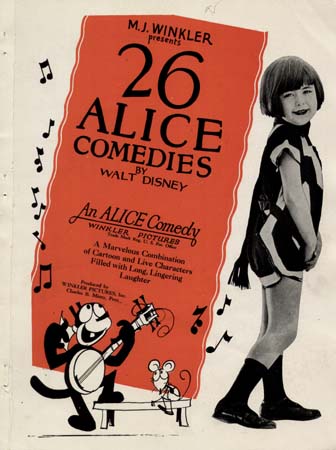
In early 1923, Kansas City, Missouri animator Walt Disney created a short film entitled Alice's Wonderland, which featured child actress Virginia Davis interacting with animated characters. After the bankruptcy in 1923 of his previous firm, Laugh-O-Gram Films, Disney moved to Hollywood to join his brother Roy O. Disney. Film distributor Margaret J. Winkler of M.J. Winkler Productions contacted Disney with plans to distribute a whole series of Alice Comedies purchased for $1,500 per reel with Disney as a production partner. Walt and his brother Roy Disney formed Disney Brothers Cartoon Studio that same year. More animated films followed after Alice.

After the demise of the Alice comedies, Disney developed an all-cartoon series starring his first original character, Oswald the Lucky Rabbit,which was distributed by Winkler Pictures through Universal Pictures

File:Trolley Troubles poster.jpg

 which was distributed by Winkler Pictures through Universal Pictures. The distributor owned Oswald, so Disney only made a few hundred dollars. Disney only completed 26 Oswald shorts before losing the contract in February 1928, when Winkler's husband Charles Mintz took over their distribution company. After failing to take over the Disney Studio, Mintz hired away four of Disney's primary animators (the exception being Ub Iwerks) to start his own animation studio, Snappy Comedies.

 In 1928, to recover from the loss of Oswald the Lucky Rabbit, Disney came up with the idea of a mouse character named Mortimer while on a train headed to California drawing up a few simple drawings. The mouse was later renamed Mickey Mouse and starred in several Disney produced films. Ub Iwerks refined Disney's initial design of Mickey Mouse. Disney's first sound film Steamboat Willie, a cartoon starring Mickey, was released on November 18, 1928 through Pat Powers' distribution company. It was the first Mickey Mouse sound cartoon released, but the third to be created, behind Plane Crazy and The Gallopin' Gaucho.

http://upload.wikimedia.org/wikipedia/en/4/4e/Steamboat-willie.jpgFile:Silly symphony.jpg


Disney continued to produce cartoons with Mickey Mouse and other characters, and began the Silly Symphonies series with Columbia Pictures signing on as Symphonies distributor in August 1929.

The studio continued releasing animated shorts and features, such as Pinocchio (1940), Fantasia (1940), Dumbo (1941), and Bambi (1942).After World War II began, box-office profits declined. When the United States entered the war after the attack on Pearl Harbor, many of Disney's animators were drafted into the armed forces. The U.S. and Canadian governments commissioned the studio to produce training and propaganda films. By 1942 90% of its 550 employees were working on war-related films. Films such as the feature Victory Through Air Power and the short Education for Death (both 1943) were meant to increase public support for the war effort. Even the studio's characters joined the effort, as Donald Duck appeared in a number of comical propaganda shorts, including the Academy Award-winning Der Fuehrer's Face (1943).

http://upload.wikimedia.org/wikipedia/en/7/7b/Three_caballeros_poster.pnghttp://upload.wikimedia.org/wikipedia/en/2/26/Melody_Time_poster.jpg


With limited staff and little operating capital during and after the war, Disney's feature films during much of the 1940s were "package films," or collections of shorts, such as The Three Caballeros (1944) and Melody Time (1948), which performed poorly at the box-office. At the same time, the studio began producing live-action films and documentaries. Song of the South (1946) and So Dear to My Heart (1948) featured animated segments, while the True-Life Adventures series, which included such films as Seal Island (1948) and The Vanishing Prairie (1954), were also popular and won numerous awards.

The release of Cinderella in 1950 proved that feature-length animation could still succeed in the marketplace. Other releases of the period included Alice in Wonderland (1951) and Peter Pan (1953), both in production before the war began, and Disney's first all-live action feature, Treasure Island (1950). Other early all-live-action Disney films included The Story of Robin Hood and His Merrie Men (1952), The Sword and the Rose (1953), and 20,000 Leagues Under the Sea (1954). Disney ended its distribution contract with RKO in 1953, forming its own distribution arm, Buena Vista Distribution

In December 1950, Walt Disney Productions and The Coca-Cola Company teamed up for Disney's first venture into television, the NBC television network special An Hour in Wonderland. In October 1954, the ABC network launched Disney's first regular television series, Disneyland, which would go on to become one of the longest-running primetime series of all time. Disneyland allowed Disney a platform to introduce new projects and broadcast older ones, and ABC became Disney's partner in the financing and development of Disney's next venture, located in the middle of an orange grove near Anaheim, California. It was the first phase of a long corporate relationship which, although no one could have anticipated it at the time, would culminate four decades later in the Disney company's acquisition of the ABC network, its owned and operated stations, and its numerous cable and publishing ventures.

Thursday, 27 February 2014

Alfons Maria Mucha

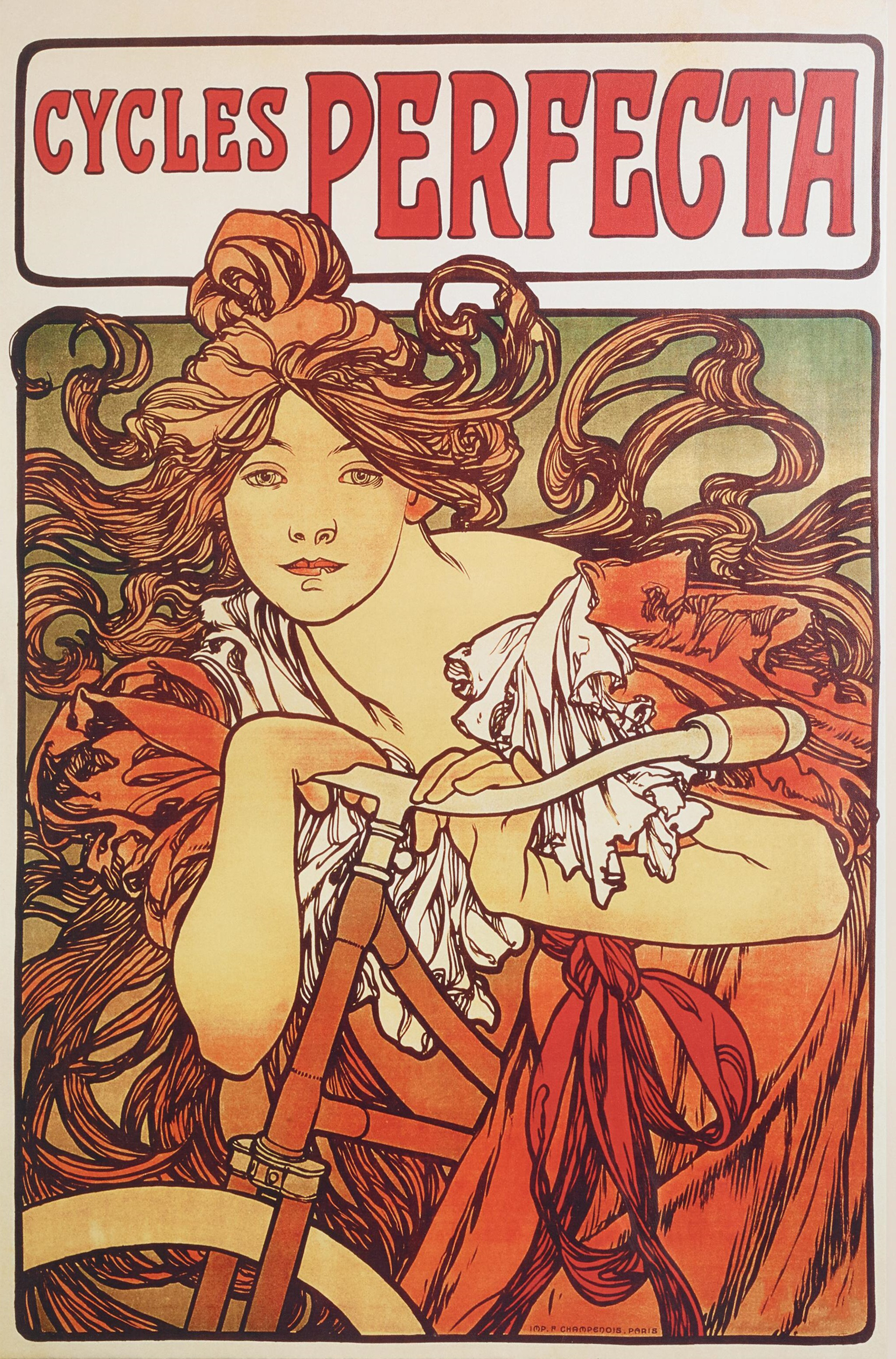
Alfons Maria Mucha (24 July 1860 - Prague, 14 July 1939), often known in English and French as Alphonse Mucha, was a Czech Art Nouveau Painter and decorative artist, know best for his distinct style. He produced many paintings, illustrations, advertisements, postcards and designs.


http://upload.wikimedia.org/wikipedia/commons/e/e3/Alfons_Mucha_at_work_on_Slav_Epic.jpg
Mucha working on one of his pieces called "The Slave Epic"


These pictures where created by Alphonse Mucha. What I love about Muchas work is the colours and line work, also the way the women are pictured, such as the dresses they wear and the elegant backgrounds they are put in, they give them a peaceful feel and not to mention their facial expressions which are depicted as calm and serene, the pictures in total I say are eye catching when you look through a museum or a book.


http://upload.wikimedia.org/wikipedia/commons/c/c0/Alphonse_Mucha_-_Poetry.jpg
http://upload.wikimedia.org/wikipedia/commons/5/5c/Alphonse_Mucha_-_Cycles_Perfecta.jpg


Mucha interior decoration at Georges Fouquet on Royale street 6 in Paris


Tuesday, 18 June 2013

Pre-Raphaelites


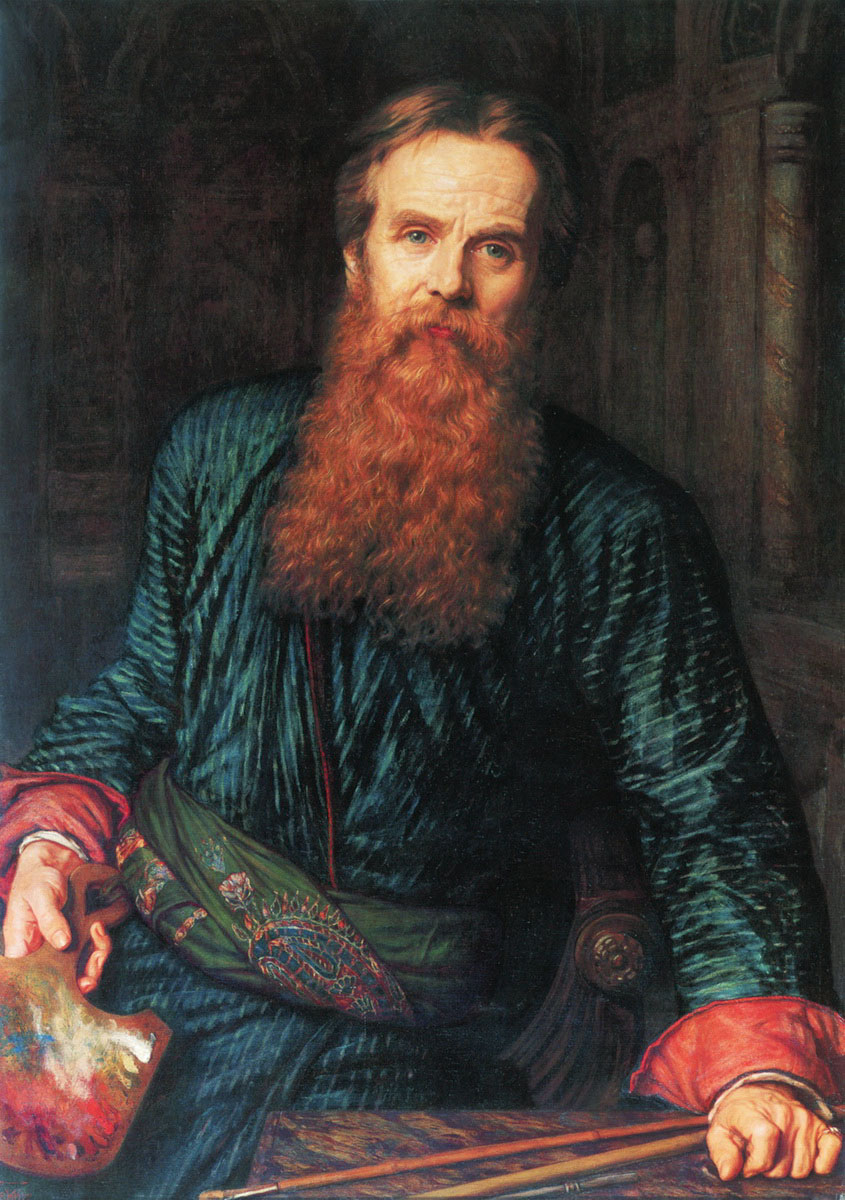
 Pre-Raphaelite Brotherhood (also known as the Pre-Raphaelites) was a group of English painters, poets, and critics, founded in 1848 by William Holman Hunt, John Everett Millais and Dante Gabriel Rossetti. The three founders were joined by William Michael Rossetti, James Collinson, Frederic George Stephens and Thomas Woolner to form the seven-member "brotherhood"

William Holman hunt was one of the founders of the Pre-Raphaelites and was born on the 2nd of april 1827 and died at the age of 83 pn the 7th of september in 1910.

His paintings were notable for their great attention to detail, vivid colour and elaborate symbolism. These features were influenced by the writings of John Ruskin and Thomas Carlyle, according to whom the world itself should be read as a system of visual signs. For Hunt it was the duty of the artist to reveal the correspondence between sign and fact. Out of all the members of the Pre-Raphaelite Brotherhood Hunt remained most true to their ideals throughout his career. He was always keen to maximise the popular appeal and public visibility of his works.

As he got older his eyesite started failing so he had to give up painting, his last two major works "The Lady Shalott" and "the light of the world" were completed with the help of his assitant Edward Robert Hughes.


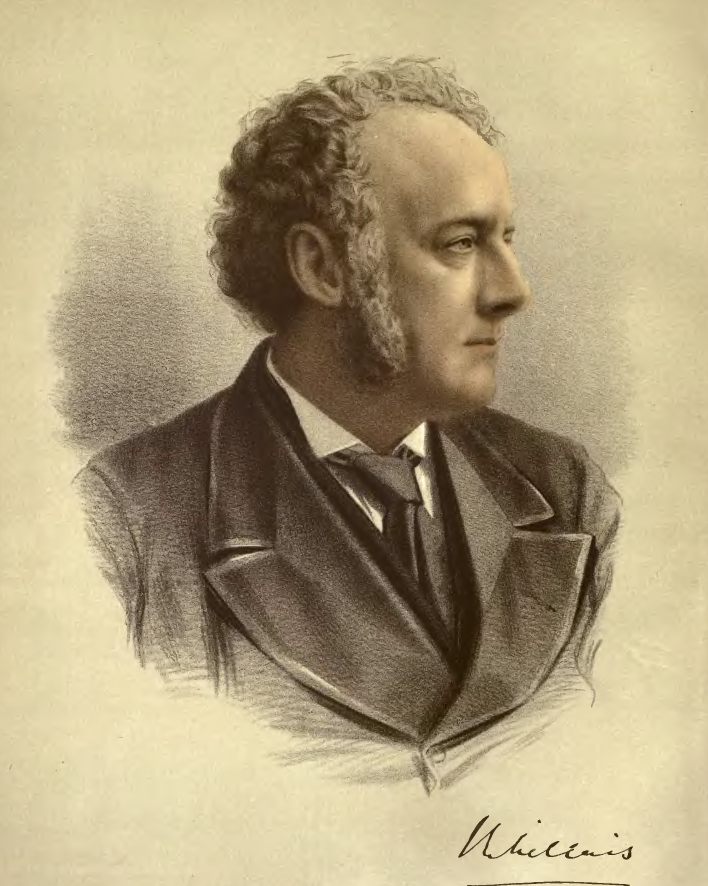
Sir John Everett Millais, 1st Baronet was one of the founders of the Pre-Raphaelites and was born on the 8th of June 1829 and died on the 13th of August 1896

http://upload.wikimedia.org/wikipedia/commons/7/7b/John_everett_millais.jpgMillais was also very successful as a book illustrator, notably for the works of Anthony Trollope and the poems of Tennyson. His complex illustrations of the parables of Jesus were published in 1864. His father-in-law commissioned stained-glass windows based on them for Kinnoull parish church, Perth. He also provided illustrations for magazines such as Good Words. In 1869 he was recruited as an artist for the newly founded weekly newspaper The Graphic. As a young man Millais frequently went on sketching expeditions to Keston and Hayes. Whilst there he painted a sign for an inn where he used to stay, near to Hayes church

http://uploads7.wikipaintings.org/images/john-everett-millais/a-flood.jpghttp://uploads5.wikipaintings.org/images/john-everett-millais/the-bridesmaid.jpg

http://upload.wikimedia.org/wikipedia/commons/7/7b/John_Everett_Millais_-_Christ_in_the_House_of_His_Parents_(%60The_Carpenter%27s_Shop%27)_-_Google_Art_Project.jpg

Dante Gabriel Rossetti 12 May 1828 – 9 April 1882) was an English poet, illustrator, painter and translator. He founded the Pre-Raphaelite Brotherhood in 1848 with William Holman Hunt and John Everett Millais, and was later to be the main inspiration for a second generation of artists and writers influenced by the movement, most notably William Morris and Edward Burne-Jones. His work also influenced the European Symbolists and was a major precursor of the Aesthetic movement.

http://upload.wikimedia.org/wikipedia/commons/6/67/Dante_Gabriel_Rossetti_by_George_Frederic_Watts.jpg 
Rossetti's art was characterized by its sensuality and its medieval revivalism. His early poetry was influenced by John Keats. His later poetry was characterized by the complex interlinking of thought and feeling, especially in his sonnet sequence The House of Life. Poetry and image are closely entwined in Rossetti's work; he frequently wrote sonnets to accompany his pictures, spanning from The Girlhood of Mary Virgin (1849) and Astarte Syriaca (1877), while also creating art to illustrate poems such as Goblin Market by the celebrated poet Christina Rossetti, his sister.
Rossetti's personal life was closely linked to his work, especially his relationships with his models and muses Elizabeth Siddal, Fanny Cornforth, and Jane Morris.


http://upload.wikimedia.org/wikipedia/commons/d/df/Dante_Gabriel_Rossetti_Water_Willow_1871.jpg http://upload.wikimedia.org/wikipedia/commons/9/95/Rossetti_girlhood.jpghttp://farm6.staticflickr.com/5146/5882870340_01331fb97c_o.jpg